Published: 07/27/2026
By Jamie Hansen, Global Health Communications Manager
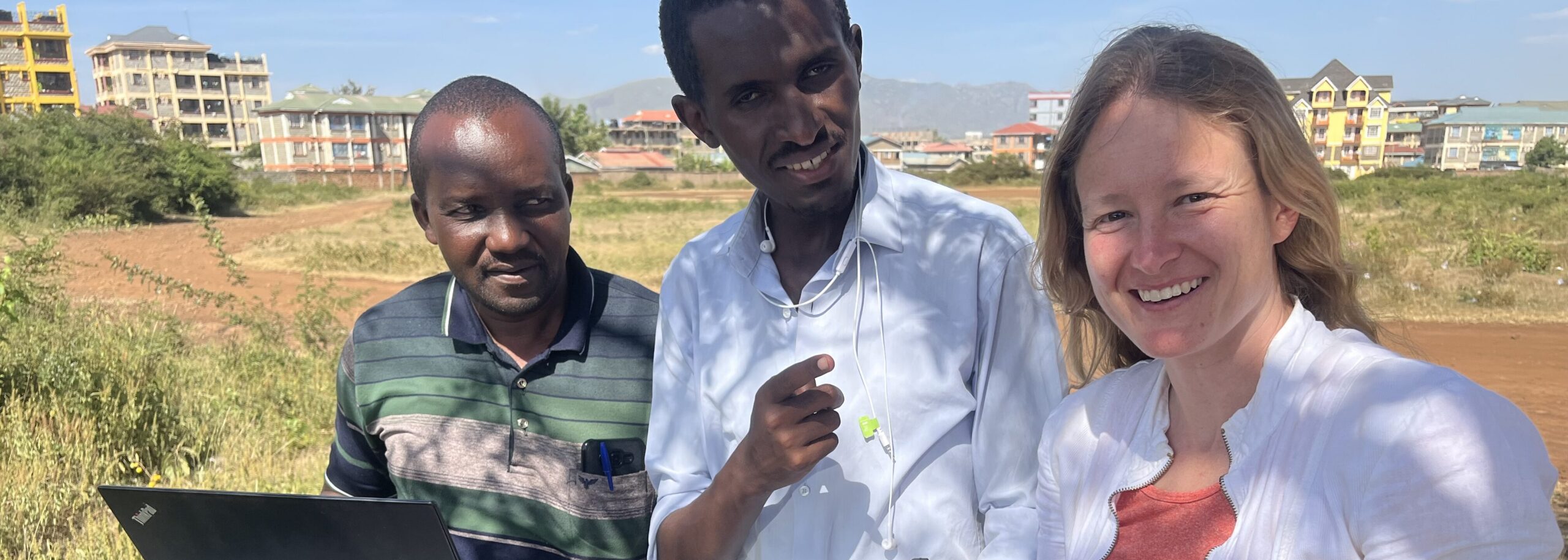
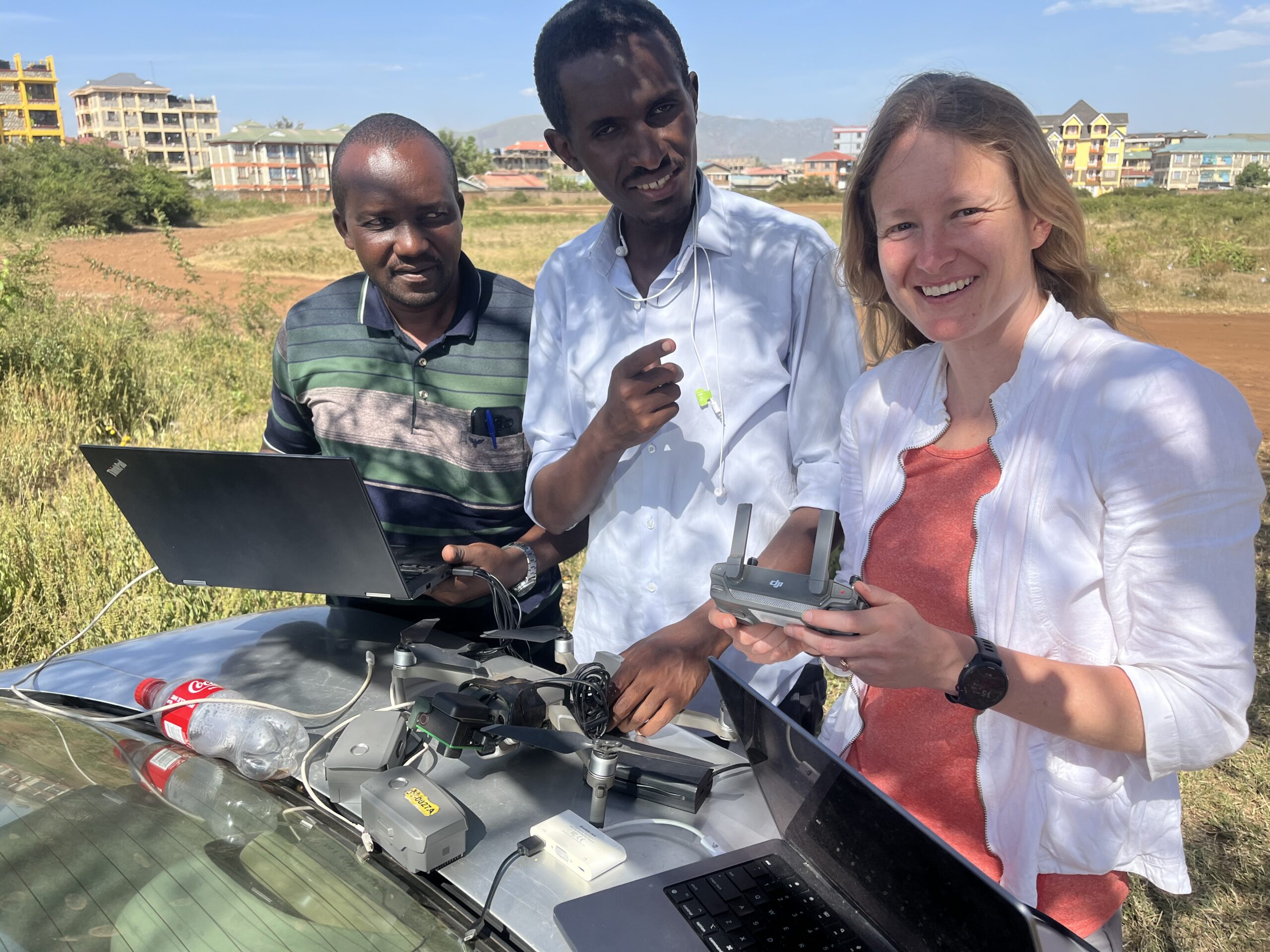
Photo caption: Joelle Rosser and collaborators in Kenya prepare a drone for flight to surveil trash
When Joelle Rosser, MD, MS, began her 2022 Global Health Emerging Scholars (GHES) fellowship in Kenya, she had a bold vision: that drones could become powerful tools to track disease risk by mapping mosquito breeding sites. There was just one problem—she knew almost nothing about conducting spatial mapping or flying drones.
The year-long fellowship enabled her to learn and explore this novel approach through supportive funding, mentorship, and dedicated time in Kenya. “I really went in kind of blind, but I got to experiment, learn from local entomologists and drone experts, and figure things out along the way,” she recalled.
Today, as an assistant professor of medicine–infectious diseases at Stanford Medicine, Rosser leads groundbreaking research using artificial intelligence and drone technology to detect mosquito breeding sites—work that is transforming how communities can protect themselves from mosquito-borne diseases spreading rapidly due to climate change.
Learning by doing in the field
Rosser pursued the GHES fellowship, supported by the Stanford Center for Innovation in Global Health and funded by the National Institutes of Health, at a pivotal moment in her career. As an infectious disease fellow at Stanford, she was most passionate about global and planetary health. But in 2020, COVID-19 restricted global research, and Rosser spent the early pandemic years focused on COVID-19. As travel resumed in 2022, Rosser sought ways to return to global research while gaining new skills.
The GHES fellowship provided crucial funding and time to develop a new research direction in line with Rosser’s lifelong passion for environmental health. Working with Desiree LaBeaud, MD, a Stanford professor of pediatrics and leading arbovirus researcher, Rosser designed a first-of-its-kind study to use drone imagery to understand trash distribution in two Kenyan communities, Kisumu and Ukunda, where LaBeaud had longstanding research partnerships. Trash provides ideal breeding grounds for the Aedes aegypti mosquito, which spreads dengue, chikungunya, and Zika virus.
“GHES was a key bridge back to global health for me during this transition out of COVID-19,” Rosser recalled.
Initially, Rosser planned to fly the drones herself. But as she learned about complex flying and regulatory considerations, she made a strategic decision: partner with a local Nairobi-based drone company with professional pilots and established regulatory approval.
“It was so much better to work with a local partner with professional, highly experienced pilots,” she explained. Rosser instead turned her attention to developing the orthomosaic maps (highly detailed, accurate maps created by stitching together thousands of overlapping aerial drone photos) and analyzing the data.
From trash piles to breakthrough methodology
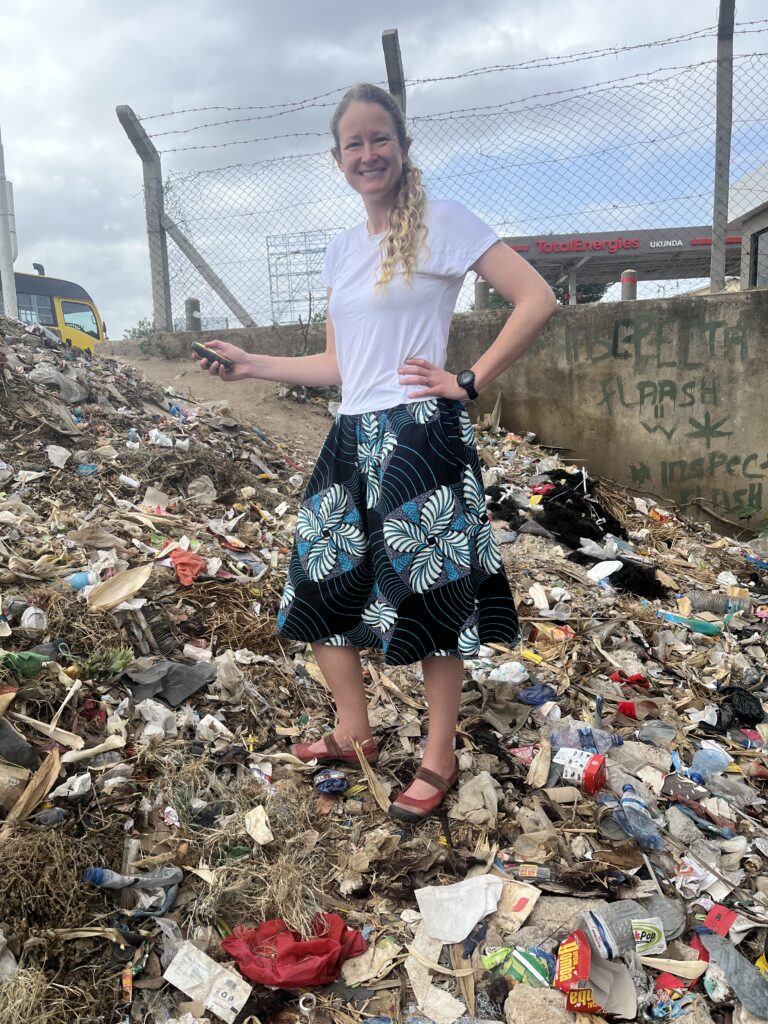
The real learning happened on the ground. Rosser spent days walking through Kisumu and Ukunda alongside local leaders and entomologists, manually documenting every trash pile to compare with drone-captured overhead imagery. Though physically demanding, the experience proved invaluable.
“I realized that trash is not a single thing,” she said. Through this intensive fieldwork, she developed a classification system for different trash types and their disease risk, as well as methodologies for ground-truthing drone imagery.
The work also reinforced a critical lesson about global health research. “Every time I spend time in the field, I am reminded of just how important that time is,” Rosser reflected. “It enables interactions that will never happen on Zoom—conversations over a cup of tea and a plate of beans and rice, or while enjoying an ice-cold Coca-Cola at the end of a long day of walking through trash.” Such conversations, she said, are essential to forming meaningful collaborations and gaining critical insights that inform the research.
Every time I spend time in the field, I am reminded of just how important that time is. It enables interactions that will never happen on Zoom—conversations over a cup of tea and a plate of beans and rice, or while enjoying an ice-cold Coca-Cola at the end of a long day of walking through trash.”
A platform for innovation
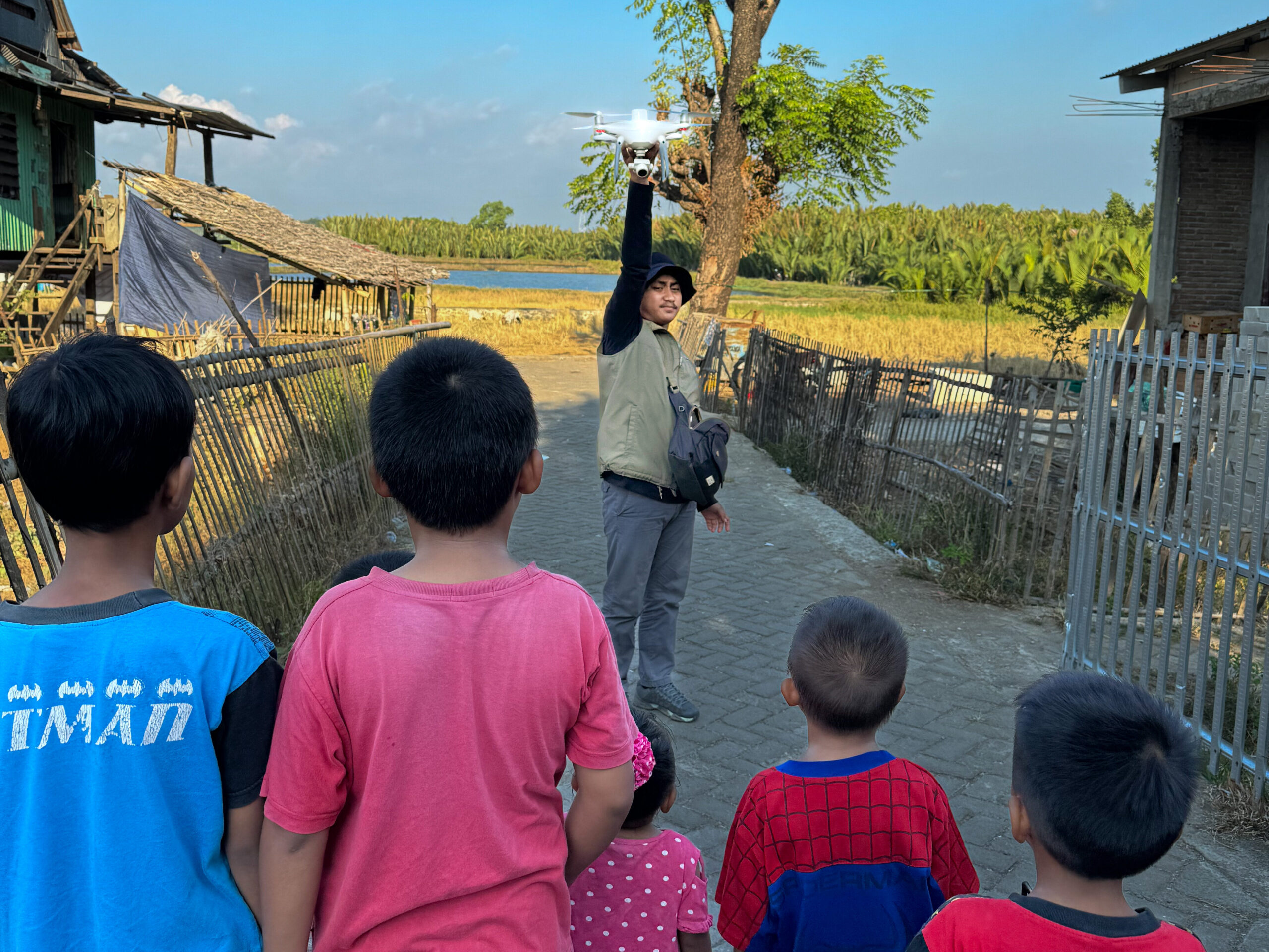
The fellowship launched what has become a core component of Rosser’s research. Building on the Kenya work, her team recently developed AI algorithms that automatically detect discarded tires—prime mosquito breeding sites—in drone imagery of Makassar, Indonesia. The AI models even identified tires partially hidden under vegetation or submerged in water.
A snowball that keeps growing
Building on this and other work in Indonesia, Rosser and her collaborators have established a joint research center at Hasanuddin University (UNHAS) in Makassar, Indonesia, focused on building health resilience to climate change.
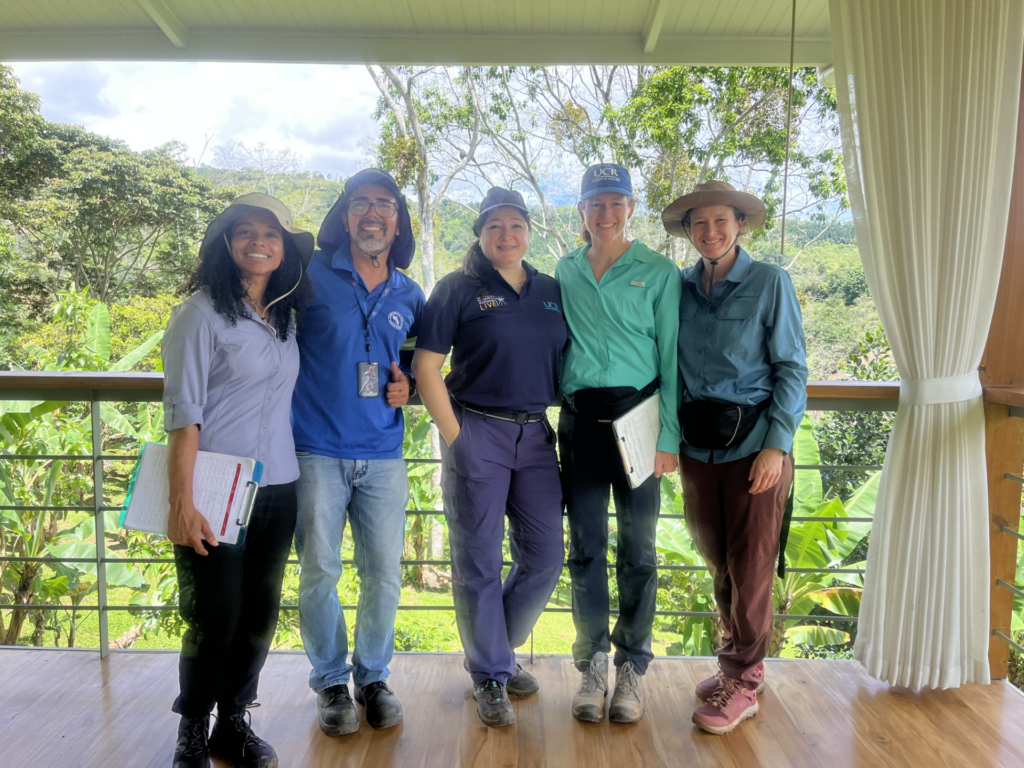
Rosser now has her own lab at Stanford and is collaborating with other disease ecologists at Stanford, including Erin Mordecai, PhD, and Giulio DeLeo, PhD, tracking mosquito breeding sites in Costa Rica using drones. She’s also developing proposals to use the technology in the United States, where dengue-carrying mosquitoes are moving northward with warming temperatures.
“The mosquitoes that transmit dengue, chikungunya, and Zika viruses are already in the U.S., and every year we see more people infected,” Rosser noted. “Our goal is to develop a tool that could be adapted to any geographical context.”
“My fellowship work started a snowball that has grown into this really cool, multi-lab, multi-site collaboration,” Rosser reflected. “It’s enabled the development of this tool, which we are exploring using in numerous ways that I never imagined at the beginning.”
Related Publications
Explore publications developed during Rosser’s fellowship or building on the methodology she established there:
- Enhancing Aedes aegypti breeding site detection: A deep learning approach to tire identification in unmanned aerial vehicle imagery from urban Indonesia
- New frontiers for unmanned aerial vehicles in planetary health research
- Comparison of unmanned aerial vehicle imaging to ground truth walkthroughs for identifying and classifying trash sites serving as potential Aedes aegypti breeding grounds
- Development of a trash classification system to map potential Aedes aegypti breeding grounds using unmanned aerial vehicle imaging
- Seroprevalence, incidence estimates, and environmental risk factors for dengue, chikungunya, and Zika infection amongst children living in informal urban settlements in Indonesia and Fiji